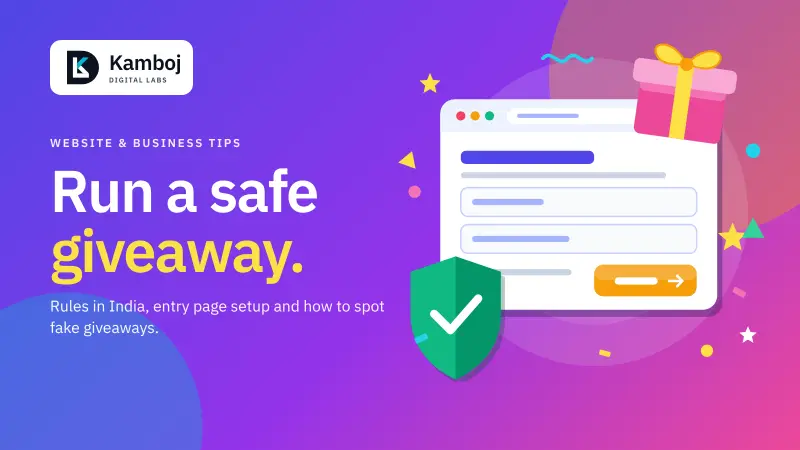
Giveaways are everywhere. This week, Club386 and Sapphire are giving away a Radeon graphics card, a Ryzen processor and a motherboard to one winner. Brands do this because it works. If you want to run a giveaway on your website in India, you can get new email sign-ups and new customers too.
But a bad giveaway can also bring legal trouble, fake entries and scams. This post shows how to run a giveaway on your website the safe way.
Is a giveaway right for your business?
A giveaway brings people who like free things. Many will never buy from you. That is normal.
To get the right people, give a prize that only your customers want. A graphics card giveaway makes sense for a computer hardware brand. A phone giveaway does not make sense for a furniture shop. The entrants will come, but they will not become buyers.
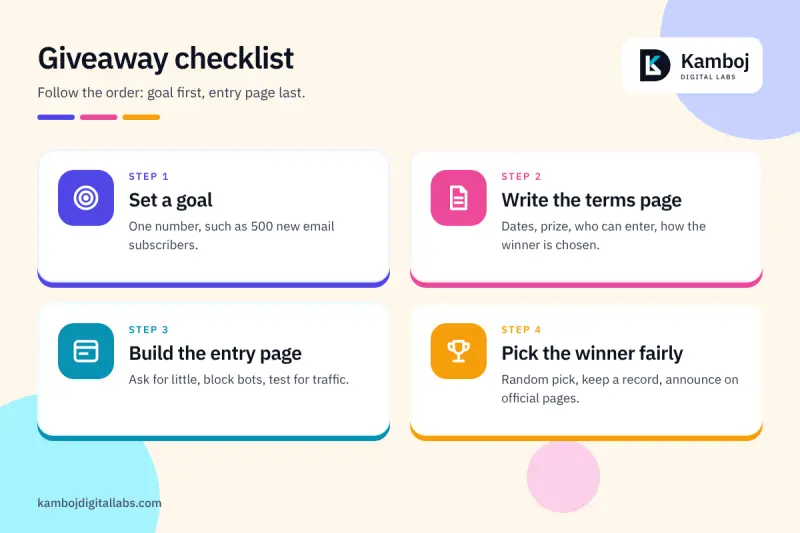
Set one clear goal before you start. For example: 500 new email sign-ups, or 100 new reviews. If you cannot name a goal, wait.
Check the rules in India before you start
Giveaway rules in India depend on the state and on how the contest works. Please read this part carefully. This is general information, not legal advice.
According to a legal overview by Venture Intelligence:
The Prize Competition Act, 1955 covers puzzle-style contests in certain states. A licence is needed if the total prizes in a month are above ₹1,000.
Tamil Nadu does not allow prize schemes where winners are drawn from people who bought goods or services from the sponsor.
The Consumer Protection Act, 2019 can treat a contest run to promote sales as an unfair trade practice.
What this means in simple words: the riskiest giveaway is a lucky draw that needs a purchase to enter. The safer plan is a free entry, with clear terms. Many organisers also write in their terms that some states are not eligible. Ask your lawyer which states to exclude.
Write a simple terms page
Put a page on your website before the giveaway starts. It should say:
Who is running the giveaway (your business name and address).
Start and end dates.
What the prize is and how much it is worth.
Who can enter, and who cannot.
How the winner is chosen and how you will contact them.
How long the winner has to reply.
What you will do with the data you collect.
Link to this page from the entry form. Do not hide it.
How to set up the giveaway entry page
The entry page is where most problems happen. Keep it simple.
Ask for little. Name and email are enough for most giveaways. Add a phone number only if you really need it for delivery.
Ask for permission. Use a tick box that is not ticked by default. Say clearly if you will send marketing emails later. India's data protection law is the Digital Personal Data Protection Act, 2023.
Stop bots. Free prizes attract bots that make thousands of fake entries. Use a simple bot check and allow one entry per email.
Plan for traffic. If a post goes viral, many people open your page at once. A cheap or slow hosting plan can crash at the worst time. Test the page before you announce.
Pick the winner fairly. Use a random pick and keep a record of how you did it. Announce the winner's first name and city, with their permission.
You can use a tool like Gleam, which Club386 uses for its giveaway. Or you can build your own entry page. A tool is faster to start. A page on your own website gives you full control of your data and your design.
A real giveaway never asks the winner to pay. Put that sentence on your terms page.
Planning a giveaway or contest page?
Tell us what you want to run. We will tell you what the page needs to handle traffic, bots and safe data storage.
Tell us about your giveawayHow to spot a fake giveaway (and protect your customers)
Scammers copy real giveaways. In 2023, AMD warned people about fake giveaways of a custom GPU, as reported by Tom's Hardware. AMD's advice was to trust only the official channels of the brand and its partners.
Use the same rules for your own giveaway. Watch for these signs of a fake:
The "winner" must pay a shipping fee, tax or "processing fee" first.
The message asks for a bank PIN, a card number or an OTP.
The account is new, has few posts, or has a name that is only close to the real brand.
The message says you must reply in one hour.
The link goes to a website you do not know.
For your own giveaway, protect your customers with three steps:
Say on your terms page that you never ask winners to pay.
Announce winners only on your own website and your official social pages.
Tell winners to contact you through the email address shown on your website.
What to do next
If you are planning a giveaway, start with the goal and the terms page. Build the entry page last.
If you need an entry page that handles traffic, blocks bots and saves entries safely, it is a normal web project. See our website and web app services to know what we build. Or send us a short project brief.
Can I ask people to buy something to enter my giveaway?
It is riskier. Some states treat draws linked to a purchase more strictly. A free entry route is safer. Ask a lawyer before you decide.
How many details should the entry form ask for?
As few as possible. Name and email are enough for most giveaways. Collect more only when you need it for delivery.
How do I pick a winner fairly?
Use a random pick, keep a record of how you did it, and tell people the method on your terms page.
Should I use a tool like Gleam or build my own entry page?
A tool is quicker to start. Your own page gives you full control of your data and design. The right choice depends on your size and budget.
How do I know if a giveaway is fake?
It asks the winner to pay a fee, asks for a PIN or OTP, comes from an account that only looks like the brand, or pushes you to reply fast.
Will my website handle a sudden rush of visitors?
Not always. A slow or cheap hosting plan can fail when a post goes viral. Test the page with many visitors before you announce.